Sunday, 12 April 2015

Albert Einstein On the Internet.

One of the greatest minds of all time, Albert Einstein always wanted to find answers and unlike most of his colleagues he would actually go out of his way to get the answers rather than wait for the answers to come to him. His personality can accurately tell us his thoughts on just about anything. So what would such a genius with uncanny tastes think about the internet?


1. Shocked
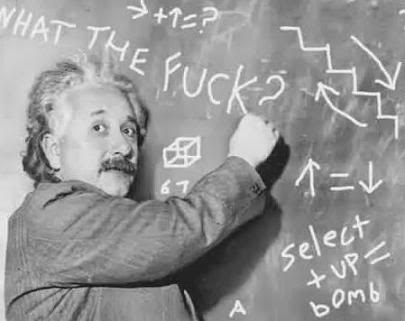


Since he's been dead for a while now bringing him back to life would be the first thing somebody would have to do to ask him this question. He would be shocked looking at the existence of such a thing but his reason for being shocked would be different. He might say that he had already conceptualised such a communications system during his time. His reason for shock would be the ability of humanity to make his vision a reality. He might say "How did you do this without me?" His arrogance is beyond imagination and this would be very apparent in his conversations.


2. More answers required

After being brutally shocked, Einstein might start looking for the answers the was so desperate to know during his time. Accept the fact that the field of Physics hasn't moved ahead of e= mc^2 means that his questions will still be unanswered. This would lead him to the conclusion that the internet is a time waster with no actual use since well he ain't getting those answers. People like Einstein were purposefully born in their era cause that was the time when many things had not been invented and there was still a long way for human evolution knowledge wise. The only problem is we haven't been able to move much ahead of the inventions and theories from the era of the greats. Better yet he might go to the Wikipedia headquarters and ask for a job to fix all their answers and contribute more to the ever expanding website.

3. Whats that Selfie?


So Einstein wakes up from the dead and is asked about the internet. He's then given a smart phone and he soon finds Snapchat and Instagram. Surely his mind would wonder, "What do all these self portraits or in modern terms selfies mean?" Since the answer would be incredibly stupid, he might actually give it a shot. That's because Einstein was the kind of guy to try new things. Actually he would rather make new things for others to try. Eventually he would get bored of the selfie game and move on.


4. Its stupid


Admit it there have been times when you're sitting on Facebook and Twitter for a large part of your day and you know you're waisting you're time. Einstein might take this into consideration and say that since its just a waste of time, the internet is stupid and anybody who uses this thing is stupid. These statements don't seem very Einstein like but you have to understand that he was an arrogant mind. Proving him wrong at anything would drive him crazy. In fact his vision of humanity might not allow him to understand such advancement in technology leading him to believe how stupid the internet really is.

5. I love it

After being shocked, looking for answers, asking the out of the blue question and criticising the internet he would eventually fall in love with it. He might actually write a book or open a Facebook account expressing his thoughts about the 21st century. Since his era was the time where you documented everything with pen and paper his habits would still remain. Only this time it would go digital.

Albert Einstein was a genius with low grades in School. That was because he thought in ways that nobody else could think which is why he was able to achieve so many accolades and make so many breakthroughs. Obviously I haven't interviewed the genius but looking at his personality this is what I came up with.

Thanks for reading!

Saturday, 11 April 2015

Give Me 10 Minutes, I'll Give You 5 facts about Stars

Stars are known to be the dominant feature of the universe and are only filled with mysteries and questions. Here are some of the most amazing mysteries about stars that will blow your mind!

1. The star that's there but shouldn't be there.

The star in question is called "SDSS J102915+172927" and like its name the existence of the Star is more complex than you think. This star has been known to exist for 13 billion years and according to theories it shouldn't even exist as the universe itself is known to be 13.8 billion years old. 13 billion years ago there was just gas and debris in space so its difficult to wrap our head around the existence of a star. Since the star did exist during the time this would also mean that the earliest planets revolved around this very star.  


2. Not all stars are hot

3d representation of a cold star from a planet 
NASA has found 14 stars that have extremely low temperatures. These stars are known as failed stars because well they could not develop after the Big bang. Their low density prevents these stars from fusing atoms within their cores. The heat generated from every star directly depends upon the rate of fusion occurring at its core. Since this doesn't take place on these cold stars, no heat is generated. Finding such a star is extremely rare and can only be seen in spectrums beyond the human eye i.e. Ultraviolet or Infrared. So the next time when somebody says that all stars are hot you can use this to counter their argument.

3. Stars formed from Stars

According to theorists before the big bang there existed a similar universe like ours. This universe had seen its end and had collapsed into one big star. What happened after this led to the big bang. So you could say that the stars we see today are the creation of the stars that were there in another universe before the big bang. 


4. Blackholes form from stars

We know that a collapsed star forms a black hole but what exactly happens. When a star collapses it has basically lost all its energy and it throws its energy into space. Accept sometimes there exists a gravity on this dead star that has the tendency to pull back this energy of the now dead sun. Most of the time this energy wraps around the dead star to form a spiral but if the energy falls back on the neutron star, a black hole is formed. The sun gets destroyed because of its own energy. This is known as the fall back. Its like throwing an object towards the sky on Earth and it comes back down. 

5. Stars in the sky aren't where they are seen
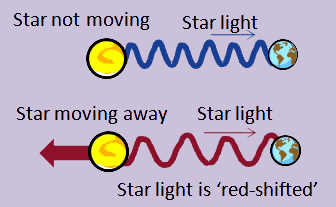
If the star was moving away it would only be visible in
Infrared. Otherwise it is visible in the Ultraviolet spectrum.

Space is expanding faster than the speed of light and it is causing Stars and everything in the universe to move. This means that stars are continuously moving in Space and what stars you see now are just the light that remains of the Star. The star itself has moved ahead. So what you see today might have been the position of the stars a few million years ago. Yes you read it "MILLION"!


Stars are everywhere in the Universe. Humans have only looked at a handful of stars in the universe but the amount of information from these stars has been ground breaking.

Thanks for reading!


Why snoop on Subhash Chandra Bose's family for 20 years since India's independence?


The topic of last night's news hour was rather unusual because history revelations aren't an every day occurrence in a country like India but Yesterday was one of those days. I present 5 reasons why Jawaharlal Nehru might have snooped on Bose's family for 20 years since india had received independence.

What you Don't know about the internet?

The internet being simple is extremely complex and putting out any information on the internet will always remain there. But there are a few things internet experts don't want you to know.


1. Can it be switched off?

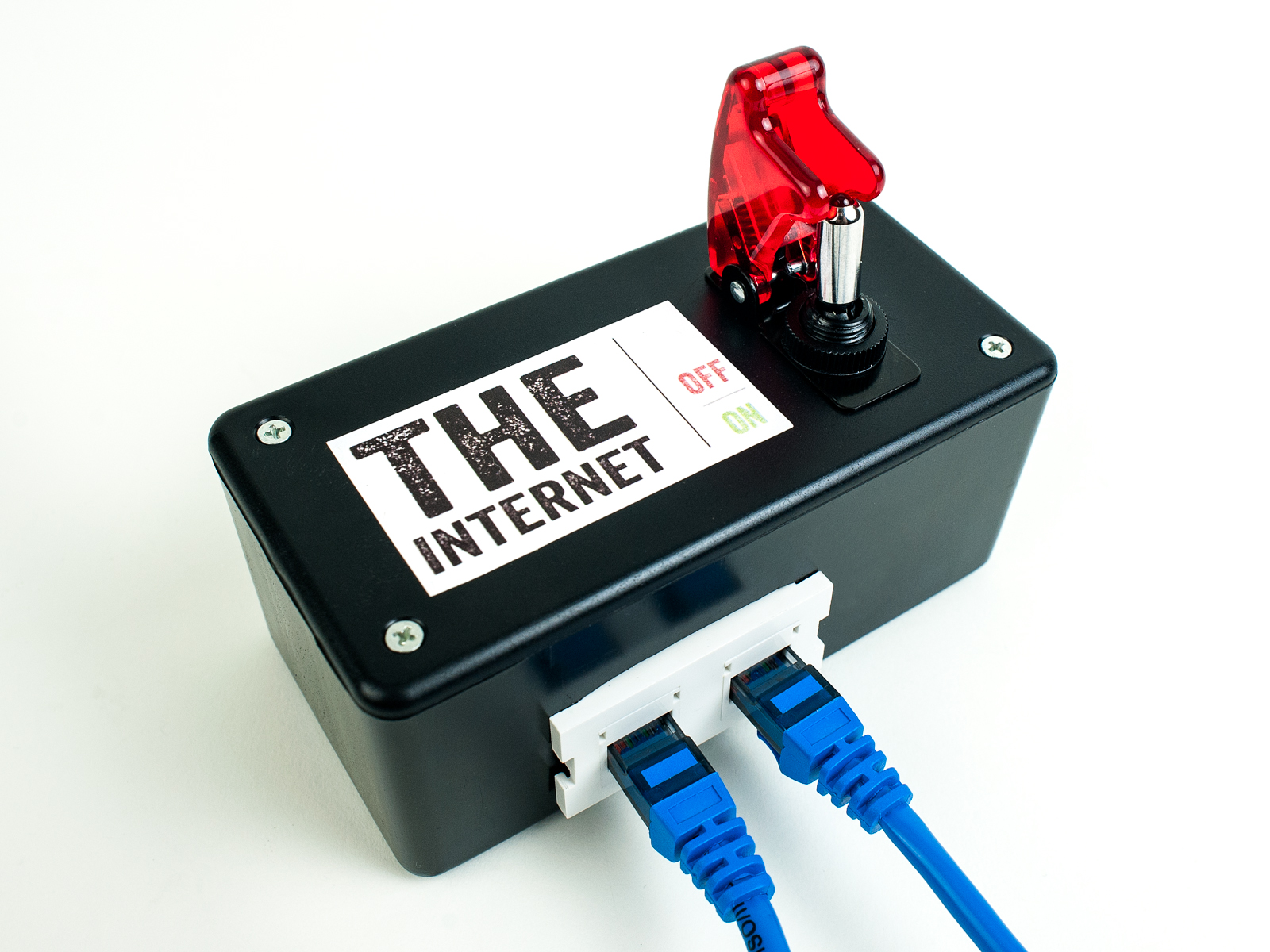
The answer is no. At least not on a worldwide scale. The internet does not have one common switch that can be just flipped and the entire world falls off the grid. Each country has many number of ISPs who control internet access for particular areas. The government of a country can shut down the internet in a country but shutting the internet worldwide is impossible. Even if the internet is shut down, internet experts will still be able to find a way to access it through satellites. 


2. Does it affect the environment?

Sending an E-mail from one continent to another doesn't seem like an activity that will affect the environment but it does affect the carbon footprint. An estimate suggests that just the data base of the internet takes 152 billion kilowatt-hours to be powered continuously. Sending any kind of data across the internet is putting load on the system causing it to use more power. With people continuously sharing data across the internet data base, more and more power is being used affecting the environment and causing a huge impact on the environment.


3. Are there multiple internets?

Approximately 40 years ago during the inception of the internet, there were many number of internets and each internet was owned by a service provider. The problem with this model was the lack of connection between each internet. To solve this it was decided that there would be only one internet in the world allowing everybody to remain connected to each other. Today I am writing this article from India and it is being read by someone in the United States. This has been possible only because of one internet that connects all of us.


4. The dark side to the internet.

I myself wasn't very aware that there exists a dark internet known as Deep web or dark web. This section of the world wide web is not indexed by search engines and there is very good reason for this.  The deep web is said to be approximately 400-500 times bigger than the surface web but these figures are a very rough estimation. Websites that aren't indulging in illegal activities come under the Dark Internet category and websites with illegal activities are categorised under Deep Web. The dark internet is known to be growing rapidly. Due to this the dark internet is not quantifiable. 

5. The internet also has black holes.

These black holes in the internet are similar to black holes in Space. If you send an email and it is not received on the other side then you might have run into one of these black holes. Like black holes in space, black holes of the internet eat up information in the form of losing packets of data. These losses can occur due to improper maintenance of cables or problems within the routers. Since the internet has such a large surface area to the point where it covers the entire Earth it is impossible to remove all these black holes. Distances are also a factor for losses of data but that problem has a much less occurrence because of ISPs (Internet Service Providers).

The last two facts mentioned in this blog weren't even known to me. After researching I was able to find these two unknown facts about the internet. These facts must be known to everybody that uses the internet.

Thanks for reading!

Friday, 10 April 2015

5 things to know about the Lumia 640 and 640 XL!

I left the days behind where I would write about every single technology news story but that does not mean the industry doesn't intrigue me. Microsoft's two new devices the Microsoft Lumia 640 and 640XL have impressed me a lot. The specifications are available on any technology website you go to today but I would like to talk about 5 things you should know about these two devices.

Thursday, 9 April 2015

What Will Space Be Like In a 100 Years?

Space is ever changing and its fascinating to think about what space would be like a 100 years from today. Here are some facts:


1. The Andromeda galaxy

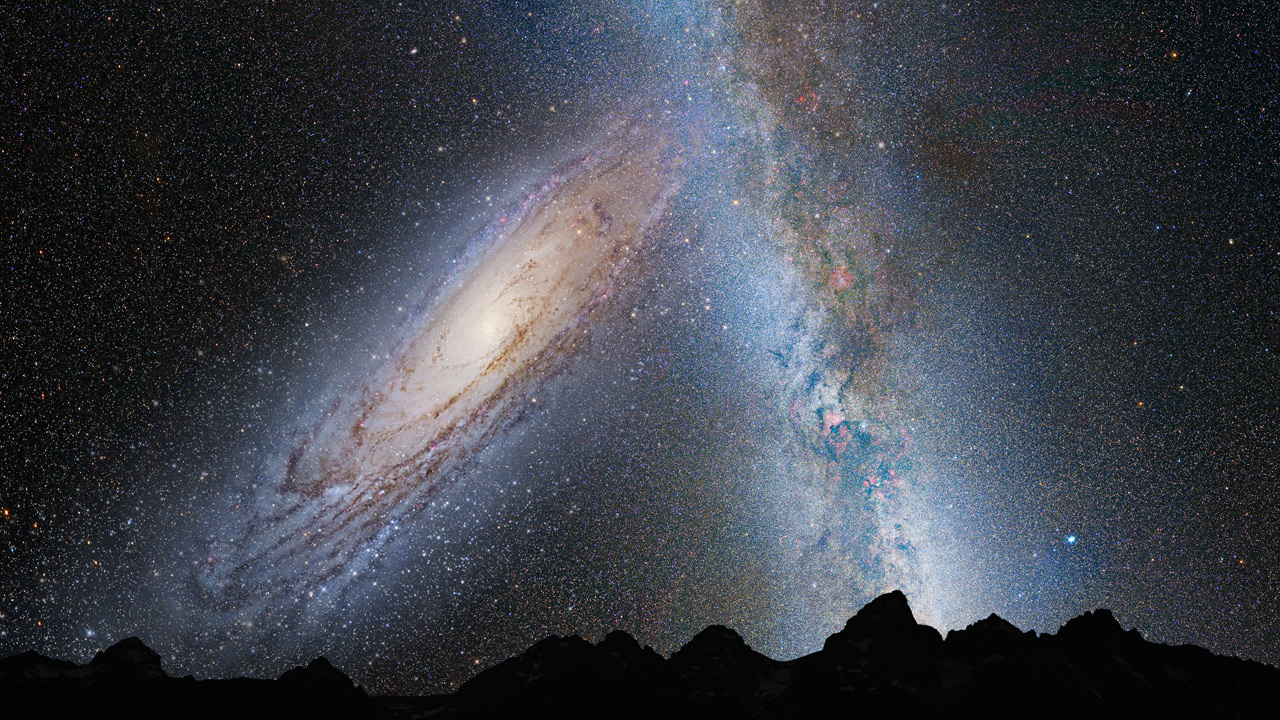
The Andromeda galaxy will be the biggest change in the skies when viewed from Earth. Currently at 2.5 million light years from the milky way, the Galaxy is known to be moving towards the milky way.  A hundred years from today, the galaxy will be much more prominent in the sky. The collision between the galaxies will occur a few billion years from today and should not affect the position of the Earth allowing human existence to continue. The galaxy is known to be twice the size of the milky way. The image shows you a future representation of what the galaxy might look like from the Earth a hundred years from today. Unfortunately for now the galaxy is only visible as a diffused cloud and we can only see it side making it difficult to spot in the Sky.

2. The Sun

Long term secular change in sunspot number is thought by some scientists to be correlated with long term change in solar irradiance. For example in the 17th century, scientists observed a pause in the solar cycles of the sun and this had a drastic effect on Earth also known as the little Ice age experienced by Europe. It is known that these changes take place every 41,000-100,000 years and are considered to be a valid reason for the Pleistocene Ice age that began 1.8 million years ago and ended 11,700 years ago. apart from this the Sun will act like any other star and expand once the Hydrogen fusion in its core has stopped. According to scientists, the sun has remained stable for 4 billion years and will remain stable for 4 billion more years. So a hundred years from today the sun might not become a monster but it will get hotter as it is getting hotter every second due to the Hydrogen fusion. 

3. Pluto


A hundred years from today Pluto would have reached its furthest point from the sun. Today Pluto is known to have barely started its journey away from the Sun. It takes Pluto 248 years to go around the sun which means after a hundred years it should have reached approximately near the furthest point from the Sun in its orbit. As Pluto moves away from the Sun it will have the tendency to lose its atmosphere due to extremely chilly temperatures. The atmosphere will collapse into the planet. This kind of climate change has never been observed in any other planet of the solar system. Scientists have found out that thanks to the Earth's rotation rate, the speed of the suns rotation is reducing by 0.00003 seconds per year. This is affecting the angular momentum of the Sun causing the Earth to move away from our Star. So its safe to assume that every planet is having the same affect on the Sun. So maybe a hundred years from today the solar system might have 8 visible planets with Pluto flying into interstellar Space.

4. Humans in Space

Humans will be able to get a pretty good experience of Space a hundred years from now. With companies already running contests for people to go to Space, it won't be long before Space travel will be like air travel today. Mars and the moon might act as second colonies in a hundred years allowing people to live on these planets and spend their holidays. It seems unreal but everything that we have today seemed unreal a hundred years back so the possibilities are endless.

5. More Earth like planets

We might possibly look for colonisation of different worlds as Earth doesn't look like its going to stay for a very long time. In a hundred years, we should be able to start the large colonisation movement and send life to other planets increasing the existence of the Human race. Currently NASA uses the International Space Station to conduct experiments for these purposes. The milky way is alone estimated to have over 2 billion Earth like planets. The only problem is the distance which makes it impossible to reach these planets within the human life span. Maybe travelling faster than light might become a possibility a hundred years from now.

These were some facts about Space a hundred years from now. As incredible as it seems most of us won't be there to experience it first hand. Anyway we should feel lucky enough to already know what it would be like a hundred years from today.

Thanks for reading!

Wednesday, 8 April 2015

What if a satellite went around the Earth in the opposite direction?

The animation shows retrograde and prograde rotation of celestial objects in Space.

The Earth is known to spin in the counter-clockwise direction when viewed from the top. It is known to spin at 1670 Km/hr which is extremely fast considering the size of the planet. From Earth, satellites are traditionally sent to space to rotate in the direction of the earth's rotation. This is normally done because of the speed advantage that the Earth provides to the satellite adding 1670 Km/hr to the speed of the satellites rotation this is known as a prograde orbit. Rotation in the opposite direction is known as retrograde orbits.

Monday, 6 April 2015

How does TV broadcasting work?


The television has changed human lifestyle but there is a lot that goes into getting that channel on your television set.

How to remember things better?


Remembering is tough but who am I to speak for the entire human race. I find it extremely difficult to remember things but over the years I have learned to cope with this problem of mine and its kind of worked out to me.
It would be wrong of me if I didn't share what I have learned in 18 years of my life so that others can benefit from it. Here are some of my techniques:

1. Shorten Everything

According to me, people find it more difficult to remember large chunks of data. I have the same problem and being a student this could be a big problem. What I started doing is reducing the amount of data that my brain has to remember in order to write all the information that is expected. If you have a list of things to remember, why not remember just the first letter of every point in that list? Read the list well at least twice. Then look at the first letter of each point and voila I remember everything. This technique has helped me so much in my life that I had to share it to make it easier for more people to remember more.

2. Writing stuff down

Call me old fashioned but I believe that there is nothing better than writing down what you want to remember or learn multiple times. I never believed in this technique but doing it once or twice cause me to think of it as magic. Suddenly everything that I had written was registered in my mind. I always had trouble to remember while studying for exams. Writing has helped me a lot and the results have been great. If there is too much to write, make it short using the first point in this article. But you have to commit to this technique when you are using it and you should have the will to push yourself to remember all that data. It might feel difficult at first but look at it as the pain before the rewards you will get.

These are 2 techniques that I found most efficient and effective. Others recommend making flash cards but I consider it as too much work. Finally what works for you depends completely on how you can cope with remembering things. Some people need to simply just read and its registered but that doesn't work for me. Anyway hope this article helps you however little to remember things better and ease your lives. If this article makes a difference to even one person then I would be extremely satisfied.

Thanks for reading!

Saturday, 4 April 2015

Why letters on keyboards aren't in alphabetical order?


Computers as we know it were invented in the 60s and 70s. All computers have one thing in common and that is the keyboard layout or at least the placement of alphabets. The key layout of a computer or any keyboard today is called QWERTY. But the reason behind this is rather odd and not applicable for why the layout is still what it is today.


During the era of typewriters, there were many more mechanical problems than what computers can have today. Typewriters have the tendency to get jammed if worked on too quickly. This is why the Qwerty keyboard was invented. This slowed the speed of typists preventing typewriters from getting jammed. But today's computers don't have this problem. Still the layout remains.

The main reason for why computers still use the layout is its familiarity. People are more comfortable with existing standards than new ones. Ask yourself this question. If you were told to change the layout of the keyboard to alphabetical order would you do it or would you prefer to stick to what you have been using since you bought your first computer? I obviously wouldn't want to change the Qwerty keyboard that I have mastered over the years.

There is another popular key layout format called Dvorak. This layout allows for faster typing if you can master it. The fingers have to travel a lesser distance to write each word allowing for faster typing.

Thanks for reading!

Friday, 3 April 2015

Why there isn't any gravity in Space?


The notion that there is no gravity in Space is wrong.

Why do we blackout?


This has been happening to me my entire life. I get up from bed too excited everything is black and I fall back on my bed. Then everything becomes normal again. Its pretty normal to experience this but why is it happening?


Blood flow

Our blood moves in our body according to the bodies orientation. Sleep for a long time and all the blood is flowing downwards and still circulating. When we get up suddenly all that blood requires some time to adjust to the bodies new orientation. Normally it takes a few seconds which is why getting up too fast will cause a blackout. The flow of blood towards the brain has reduced for a partial moment during the blackout phase. Any change in blood flow can also cause a blackout. Getting rid of stitches also causes a blackout and I say this from personal experience. The brain suddenly realises that something has changed during the removal of stitches causing the blackout.

Sickness

Blackouts can occur during sickness. The main issue during sickness is the lack of intake of every foods and fats. The brain is suddenly worried that why isn't the body getting normal food and this causes a blackout or atlas you are more prone to one during sickness. The body is also known to get weak during sickness because the body is looking for resources while getting rid of the illness. Weakness can also be a cause of getting a blackout.

These are the two main reasons for blackouts that I have experienced and my understanding says that they are normal and experienced by many others in the world. The only good thing about a blackout is that it lasts for just a few seconds.

Thanks for reading!

Thursday, 2 April 2015

Why time runs fast and slow in different situations?


Time is always running. Its speed neither changes nor can it be changed, or can it?

 When we are engrossed in some work time flies but at the same time, for somebody else time must be moving extremely slow because they are going through a boring work day. The simplest explanation for this is diversion. When we are diverted, we don't pay attention to time. Thats why it moves so fast. If we are not diverted, time moves very slowly. The same can be experienced while watching a film. A good film will cause time to just fly by but a bad film will bore you.

That was the reasonable explanation but what if we go the fictional route. Einstein said time is relative and that it changes in different points in the universe. Maybe doing important work will full dedication has the same consequence of time running quickly. If this were true, all of us should be at different points in the day but that does not happen. Thats why I started the paragraph stating that I was taking the fictional route. 

Time is a relative quantity and cannot be controlled. But it looks like we can control the speed at which time runs for us. If you're busy then you know time is going to fly. I have had experiences of time flying while studying during examinations. Time is damn slow during lectures. I believe most people have the same experience. 

If time runs differently for different people then there must be a way to control it. We don't have the power to control time yet but the speed of time can be controlled by us. We do it without even knowing, knowing that time will fly in certain situations. Its pretty confusing but I hope I was able to convey what I wanted to say. 

Monday, 30 March 2015

Why do we forget?


Its an interesting phenomenon that almost all humans posses. You could also call it our only weakness. Forgetting is a part of human life and it is frustrating. So whats happening in that brain of yours when you forget something. This article is my perception of the act of forgetting and what you might find else where could be different.

1. Situational Forgetting

Depending on a particular situation your brain might try to free up some space for newer information that will be more relevant for an easier future. During exam preparation you would realise this happening to you. After writing one examination, if you would study for the next exam, you may not remember some of the data that you had processed for the previous examination. I would call this situational forgetting because the brain is acting according to your present situation.

2. Seeing and forgetting

There have been countless instances where you might have seen a film and when a scene of the film is being talked about, you cannot recall it at all. A reason for this is the lack of attention you are paying towards what you had seen. I often wonder into thoughts during a film which causes me to lose a lot of data from what I had seen. This can be classified as looking at something and forgetting.

3. Blankouts

This usually occurs when you are in a panic situation or are having a panic attack. You might be in the middle of an examination or giving an interview. It isn't an isolated problem as every human experiences this. To avoid blanking out, its always good to remain calm and not think about what the future holds since the future always solves itself.

These are some of the forgetting experiences that I have had in my life. There might be more experiences that I have had but I must have "forgotten".

As always....
Thanks for reading!


How does weather forecasting work?


The only recurring occurrence on Earth is the constant change in Weather. With so much technology at our disposal we still struggle with weather predictions. The art of accurate weather prediction rests within the controlling factor of the weather. We haven't been able to get a very direct answer but weather stations look for certain key geographical indicators that help them give you an estimation of the weather.

1. The Oceans

This one is perhaps the biggest indicator available on Earth and I mean this literally. The heating and cooling of Oceans can tell us the direction of winds. We can also get to know the temperature that the coast can experience from the oceans. If you have gone through School, you must have read about the land breeze and Sea breeze phenomenon. Since winds move from colder to warmer areas, we can get to know if the land is cooler than the water or vice versa. As we can estimate the positioning of the Sun before hand, we can estimate the temperatures based on how hot or cold an Ocean will be.

2. Satellites

This one is perhaps the most accurate till date as it gives us a birds eye view of the weather changes as it is happening. This might make you think that this should be pretty accurate as you can literally see whats happening with the weather. But you cannot be more wrong. Since the Earth is constantly moving, the heating effect of the sun also changes. This causes sudden changes which is why weather forecasts tend to be so unpredictable. Satellites though have been life savers as they can easily predict storms long before they hit.

3. The winds

Wind speed measurement is the most popular technique used by weather forecasters. It tells weather stations about incoming clouds and the direction that they are moving in. Stormy weather can be predicted from winds much before hand. Blowing of winds are an indicator of pressure differences on Earth.

Off the top of my mind these are the most popular techniques used for weather prediction. Accuracy can only be increased if we can predict the positioning of the sun and Earth and also be able to predict the amount of heat that the Earth will receive at that moment. Since this is very difficult to do at such a large scale, we haven't been able to do this.

As always....
Thanks for reading!

Saturday, 28 March 2015

What can gravitational lensing indicate?


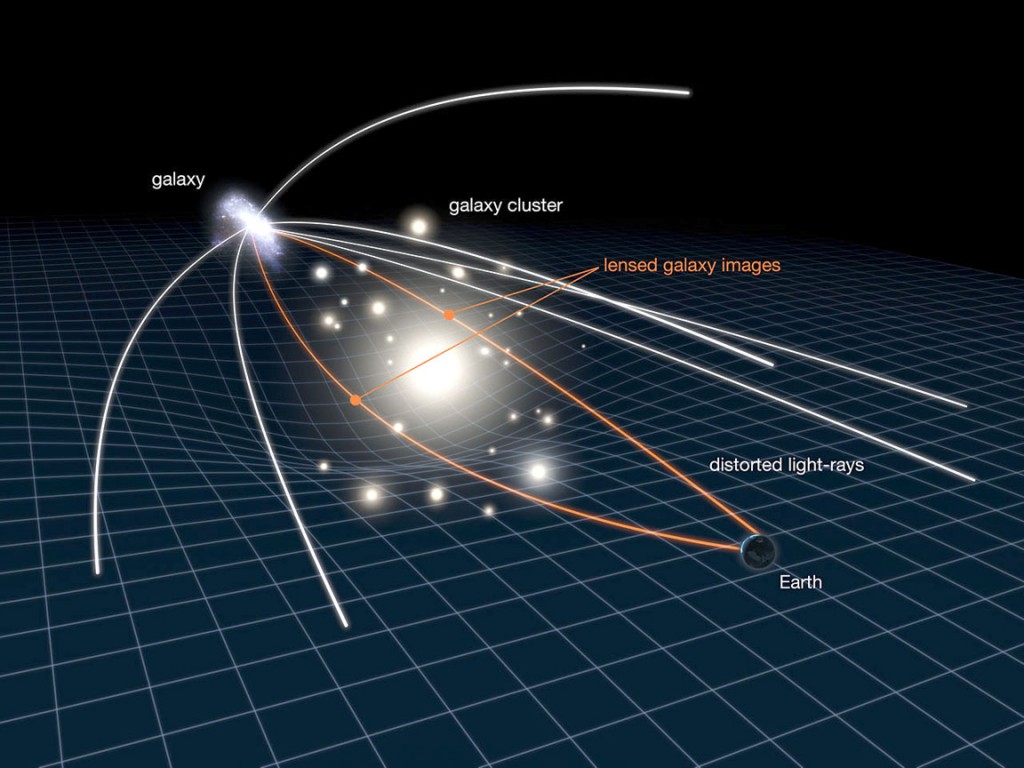
Gravitational lensing is a phenomenon that has often occured in Space. It is the bending of light from a light source over long distances. The observer usually sees a hollow circle of light rather than the entire light source. This phenomenon itself is intriguing but it could indicate the presence of a black hole.

A black hole has been known to be so strong that it has the capability of bending light. The problem with just determening the presence of a black hole from this phenomenon may not be able to tell us the location of this black hole. Since the light is reaching the observer from a very long distance, the black hole could be anywhere in between.

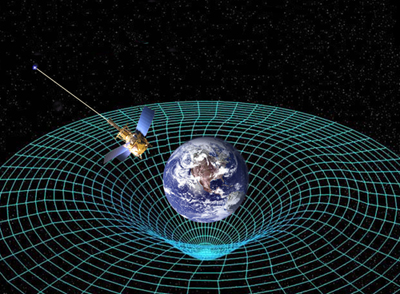
Lensing might also occur due to scattering of light. There could be millions of celestial objects between the observer and the light source. Anything that could cause refraction or reflection can cause this phenomenon. It would all depend on the angle at which the light source is observed. The name is gravitational lensing becuse light is known to bend only in the presence of a lens or gravity.

Finally its just light bending because of the effect of gravity and the distance the light has to travel. Lensing only occurs with far off light sources so you could only imagine the intensity of brightness at the source.

Thanks for reading!      

Is our sun also moving like planets?


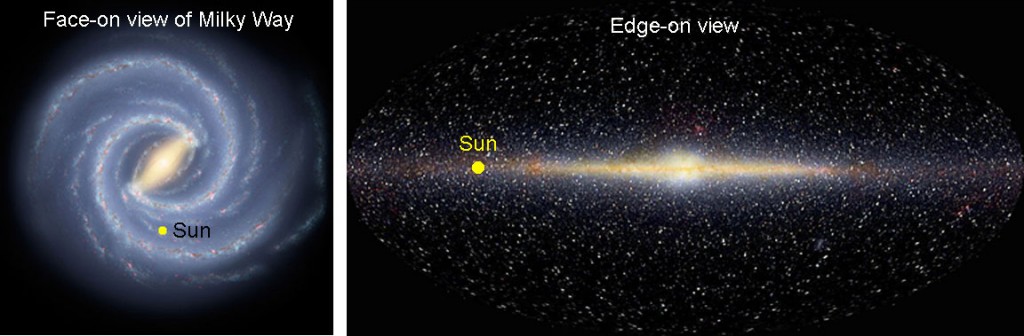
For as far as we can see, the Sun is in a centrally steady position with the planets revolving around it. But if you zoom out a little bit and look at the Milky Way, your perspective changes drastically. The Milky Way has a centre that is supposedly a collapsed star also known as a black hole. A strong centre around which many celestial bodies revolving is in a way the rule of the universe. If this is true, it means that our sun is moving continuously and taking the entire solar system with it. But if this were true, why hasn't there been a collision in all this movement?

We have to consider that if the Sun revolves around the milky way then everything else in the milky way is also doing the same thing. There could also be the possibility that our sun and the solar system might be revolving around a bigger sun which makes our existence really small in the sea of the universe. The possibility of this maybe unlikely because if it were happening, we would be able to see two suns in our sky.

Looking at an even bigger picture, if the sun revolves around the Milky Way then is the milky way also doing the same thing but at a much much larger scale that we are not able to perceive. If this were happening then this could be the way the universe works. The galaxies look stable but in reality they are moving around this huge central power. This would also prove that how are Galaxies stationary and not moving around. We will be able to conclude that there is no such thing as dark matter.

The star positions appear similar to us every night because everything in the milky way must be revolving around the centre at the same speed. A better example of what's happening here can be two trains travelling at the same speed parallel to each other. The people on the two trains will feel that they are stationary but in reality they are moving at very high speeds.

Thanks for reading!

Thursday, 26 March 2015

What's the ISS docking procedure?


The international space station or ISS has been up in Space for more than a decade and it has seen many people aboard it. Astronauts mostly go up there in shifts of 6 months but there is a lot of procedures and physics involved in the transportation of these astronauts.

Astronauts first board a Soyus rocket in Russia that takes them up into space. Since the ISS is moving around the Earth at 17,000 Km/hr its impossible for the launched soyuz module to straight away reach the ISS and dock. There are several burns that astronauts have to perform during the procedure.

The first step is to get the soyuz module to start orbitting the Earth. For orbitting the Earth the astronauts use up one of their several burns. The next step is to move towards the ISS. Now the astronauts have to perform burns at each half orbit points. So a burn at 180 degrees of the orbit and another burn at 360 degrees. This will allow the circumfrance of the Soyuz's orbit to increases allowing it to get closer to the ISS. 

Finally when the Soyuz rocket is inline with the ISS the astronauts apply another burn that allows the Soyuz rocket to get ahead of the ISS. Now the soyuz rocket is supposed to rotate so that the hatch faces the dock of the ISS. A final burn procedure is performed to get the Soyuz closer to the ISS and ultimately the module is docked.

It typically takes around 30-35 minutes for the entire docking procedure and the soyuz is continuously monitored from the ground to ensure that the angles are correct. A slight micalculation can be disastrous.          

Later this month Scott Kelly and two other astronauts will be travelling to the Space station which is what made me write this post cause surely people might want to know whats happening through the journey from Earth to ISS.

Thanks for reading!

Wednesday, 25 March 2015

How Jupiter could have destroyed our solar system?


Jupiter, the worlds largest planet in our solar system, known for its unpresidented gravitational force wasn't as dosile as the planet is today. Jupiter during the inception of the solar system wasa violent beast calling for destruction. Jupiter had a powerful whirling spiral that was the product of the large gravitational force the planet posseses. This whirling spiral was known to suck and throw objects into Space and towards other planets. It might have been a very scary site from Earth but to be fair human civilization didn't exist during the time.

According to Scientists, the only thing that saved the entire solar System was the planet Saturn. Saturn was known to also posses a very strong gravitational force that maybe was even more powerful that the gravity on Jupiter. This gravitational fource from Saturn helped Jupiter to get rid of that devestating whirlwind spiral. The forces of saturn also caused Jupiter to be placed behind mars in our Solar System.

Jupiter's gravitational force has never reduced as even today anything coming even remotely close to the planet is sucked in by it. The gravitational forces have also caused continuous sandstorms and the infamous red dot on the planet is actually a sand storm that has existed for centuries. Apart from this the planet has also been known for changing the course of many flying objects and also caused the formation of many other celestial bodies. Now thats a lot of creation and or destruction from one planet. 

Saturn on the other hand might have lost some of its gravitational force as it isn't as powerful as before. But it still is able to hold its rings and moons which makes it the most beautiful planet in our solar system. Its fascinating to think about the history of these planets and the kind of activities our solar system has gone through.

Thanks for reading!                  

Tuesday, 24 March 2015

Why string theory doesn't add up?


String theory suggests that the point-like particels in particle physics are represented as one dimensional strings. Now there is a model of the universe that is built on string theory which is what doesn't add up for me. This model shows space as a blanket of strings on which everything in the universe sits.

The revolution of the Earth around the Sun and the moon around the Earth make sense in this model. But what about objects that are in continuous motion and aren't revolving around any object like asteroids. If space were a blanket of stirngs, that would mean that there should be a sense of direction as well in Space. But that just isn't there. There probably is a criss cross of blankets in space. This only complicates things instead of simplifying it. Since string theory is supposed to represent everything in one dimension, Space just cannot be understood with this theory.

Finally these are just theories and haven't been prooven. Actually it isn't possible to proove such theories because they have just been made up to make it easier for the understanding of the universe. Using string theory for the secrets of the universe isn't going to give you too many ground breaking answers.

Thanks for reading!